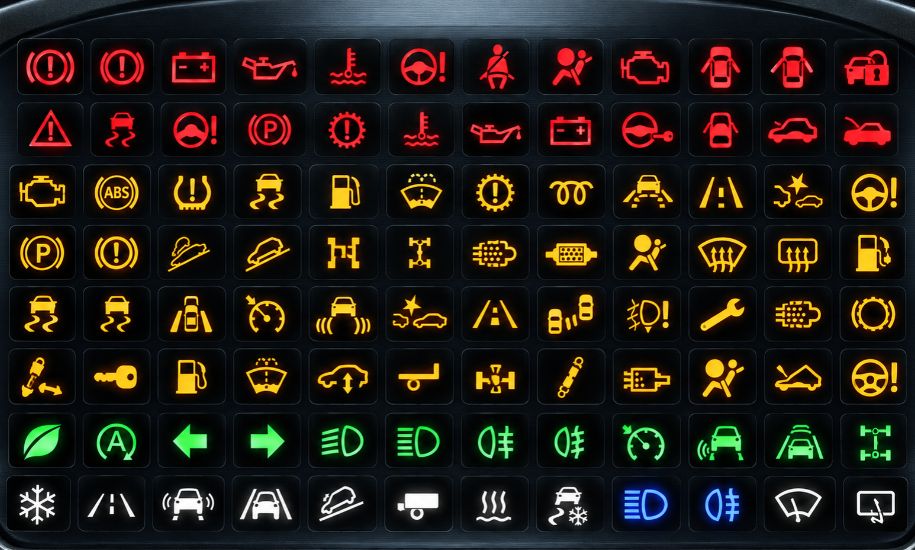
Understanding the warning lights on your car’s dashboard is an essential part of safe driving. A small symbol can alert you to low tyre pressure, an engine problem, overheating, or a fault in the braking system. Some lights simply indicate that a feature is switched on, while others warn you that immediate action may be necessary. Knowing what these indicators mean can help you respond quickly, prevent expensive repairs, and protect yourself and other road users.
This guide to car dashboard symbols and meanings explains the most common warning lights, their colours, and the steps you should take when they appear. Whether you drive a Nissan, Toyota, Volkswagen, or another vehicle, learning to recognise these symbols will make it easier to understand your car’s condition.
Understanding Dashboard Warning Light Colours
Dashboard lights use different colours to communicate the importance of a message. Although the exact meanings can vary by manufacturer, colour is a useful first indication of what you should do.
Red Dashboard Warning Lights
Red warning lights generally indicate a serious problem or an important safety reminder. A red oil pressure warning, for example, may mean the engine is not receiving sufficient lubrication. Continuing to drive could cause severe engine damage.
If a red warning light appears while driving, find a safe place to stop when the symbol indicates an urgent fault. Switch off the engine if necessary and consult the owner’s manual. Never ignore a red brake warning or an overheating alert.
Yellow and Amber Dashboard Lights
Yellow or amber lights usually indicate a fault, a system limitation, or a condition that requires attention. Examples include the check-engine light, tyre pressure warning, and ABS indicator.
These warnings do not all have the same urgency. Some allow cautious travel to a repair facility, while others require you to stop or seek assistance. A flashing engine warning accompanied by rough running, for example, can indicate a serious misfire.
Green, Blue, and White Indicators
Green, blue, and white symbols commonly show that a vehicle feature is active or provide information about the car’s operating status.
A green arrow indicates an active turn signal, while a blue headlamp symbol usually means the high beams are switched on. White indicators can display information about driver assistance, key recognition, or other vehicle functions. Always consider the accompanying message and your vehicle’s manual.
Common Car Dashboard Symbols With Names
Recognising the icon is the first step towards understanding what your vehicle is communicating. The following examples cover some of the most important dashboard signs and their meanings.
| Dashboard symbol | Meaning | What to do |
|---|---|---|
| Oil can | Low engine oil pressure | Stop safely and switch off the engine. |
| Engine outline | Engine management or emissions fault | Arrange a diagnostic check; stop if the light flashes with serious symptoms. |
| Battery with plus and minus signs | Charging system problem | Stop safely if necessary and arrange assistance. |
| Thermometer over waves | Engine coolant temperature warning | Stop safely and allow the engine to cool. |
| Exclamation mark inside a circle | Brake system warning | Check the parking brake; seek assistance if the warning persists. |
| ABS inside a circle | Anti-lock braking system fault | Drive cautiously only if braking remains normal and it is safe to do so. |
| Flat tyre with an exclamation mark | Low tyre pressure or tyre monitoring fault | Check tyre pressures and inspect for damage. |
| Person with an airbag | Airbag or restraint system fault | Arrange a prompt inspection. |
| Fuel pump | Low fuel level | Refuel as soon as practical. |
| Seat belt symbol | Seat belt reminder | Fasten the seat belt. |
| Car with wavy lines | Traction or stability control | Check whether the system is intervening or reporting a fault. |
| Spanner symbol | Service reminder on some vehicles | Check the maintenance schedule and dashboard message. |
This car dashboard symbols with names chart is a useful starting point, but it cannot replace the manual for your specific vehicle. Some icons look similar even though they indicate different systems.
What Do Yellow Car Warning Lights Mean?
Understanding yellow car warning lights is particularly useful because these indicators cover a wide range of conditions.
The check-engine light is one of the most recognisable. It can indicate a problem with engine management, emissions equipment, sensors, or the ignition system. If the light remains steady and the car runs normally, arrange a diagnostic check promptly. If it flashes or the engine runs roughly, reduce the risk of further damage by stopping safely and seeking professional advice.
The tyre pressure monitoring system (TPMS) light usually resembles a cross-section of a tyre with an exclamation mark. It may indicate that one or more tyres are underinflated. Check the pressure when the tyres are cold and use the manufacturer’s recommended figures. If a tyre appears damaged or the car handles abnormally, do not continue driving on it.
An ABS warning indicates that the anti-lock braking system may not be functioning correctly. Conventional braking may remain available, but the anti-lock feature could be disabled. If the red brake warning also appears, or braking feels different, stop safely and seek assistance.
Other amber indicators can relate to traction control, diesel particulate filters, parking sensors, or advanced driver assistance systems. The exact response depends on the symbol and any message displayed.
Car Dashboard Symbols and Meanings: Nissan, Toyota, and VW
Although many manufacturers use internationally recognisable symbols, the details can differ between models, model years, and equipment levels.
Nissan Dashboard Symbols and Meanings
Nissan vehicles may display warning lights for engine oil pressure, battery charging, airbags, braking, power steering, tyre pressure, and engine management.
The malfunction indicator light generally relates to engine management or emissions systems. Its behaviour matters: a steady light and a flashing light can indicate different levels of urgency. A driver should consult the correct Nissan owner’s manual rather than assuming that every model uses identical warning procedures.
Toyota Car Dashboard Symbols and Meanings
Toyota vehicles use familiar indicators for oil pressure, engine temperature, charging, ABS, airbags, tyre pressure, and stability control. Hybrid models may also display warnings relating to the hybrid system and high-voltage components.
If a warning appears alongside a message on the multi-information display, read the message carefully. Hybrid system warnings deserve particular attention because the recommended response may differ from that of a conventional petrol or diesel vehicle.
VW Dashboard Symbols and Meanings
Volkswagen vehicles may display alerts for engine management, brake wear, tyre pressure, electronic stability control, steering, and driver assistance features.
Some Volkswagen models also include indicators for adaptive cruise control, lane assistance, and diesel particulate filters. Their meanings can depend on the specific equipment fitted to the vehicle. Refer to the relevant owner’s manual before deciding whether it is safe to continue driving.
What Should You Do When a Dashboard Warning Light Appears?
Responding correctly to a warning light can prevent a minor fault from becoming a major repair.
First, identify the symbol and its colour. Check the dashboard display for an accompanying message, and consider whether the vehicle feels or sounds different. Unusual noises, loss of power, smoke, a burning smell, or changes in steering and braking increase the urgency.
Second, stop safely when the warning indicates an immediate hazard. Do not stop in a dangerous location unless remaining in motion presents a greater risk. If the oil pressure or engine overheating warning appears, avoid continuing to run the engine unnecessarily.
Third, consult the owner’s manual. If the cause remains unclear, contact a qualified mechanic or roadside assistance service. Avoid attempting repairs that require specialist equipment or expose you to hot, moving, or electrically hazardous components.
Finally, do not assume that a light going out means the fault has been fixed. Some problems occur intermittently and may still require diagnostic testing.
Can You Find a Car Dashboard Symbols and Meanings PDF?
A printable reference chart can be helpful to keep in the glove compartment or store on your phone. Look for a chart that clearly identifies the icon, explains its meaning, and describes the appropriate response.
However, a generic car dashboard symbols and meanings PDF may not include every warning light used in your vehicle. Manufacturer-specific documentation is the better choice for less common alerts, hybrid systems, and advanced safety features. Check that any guide matches your vehicle’s make, model, year, and market.
Drivers in the UK can use general motoring guidance to understand warning-light colours, but the vehicle handbook remains the most reliable reference for individual symbols.
Frequently Asked Questions
What is the most serious dashboard warning light?
The red oil pressure warning and engine overheating warning are among the most urgent because continued operation can cause serious engine damage. A red brake warning can also indicate a significant safety problem. Follow the vehicle’s instructions and stop safely when required.
Can I drive with a yellow engine warning light?
It depends on the warning and how the car behaves. A steady light with normal performance often permits a cautious journey for diagnosis, subject to the owner’s manual. A flashing light, rough running, smoke, or loss of power calls for more urgent action.
Why do dashboard lights appear when I start my car?
Many vehicles illuminate warning lights briefly when the ignition is switched on. This allows the vehicle to check its systems. If a warning stays illuminated after the engine starts, investigate its meaning rather than assuming it is part of the normal startup sequence.
Are dashboard symbols the same in every car?
No. Many symbols are shared across manufacturers, but their appearance, functions, and recommended responses can vary. Nissan, Toyota, Volkswagen, and other manufacturers may also provide additional indicators for particular features or powertrains.
What does a battery warning light mean?
A battery-shaped warning light generally indicates a charging system problem rather than simply a weak battery. The alternator, wiring, belt, or battery may be involved. Stop safely if necessary and arrange assistance before the problem leaves the vehicle unable to run.
Conclusion
Learning to recognise dashboard indicators helps drivers make safer decisions and respond to vehicle problems before they become more serious. Red warnings often require immediate attention, amber indicators usually call for investigation, and green or blue lights generally communicate that a feature is operating. However, the symbol, its behaviour, and the manufacturer’s instructions should always guide your response. For more practical guides and helpful motoring information, Brit Current aims to help readers make informed decisions about everyday driving and vehicle maintenance.