Richard Liu and German Larrea: Business Empires, Net Worth, and Life Stories

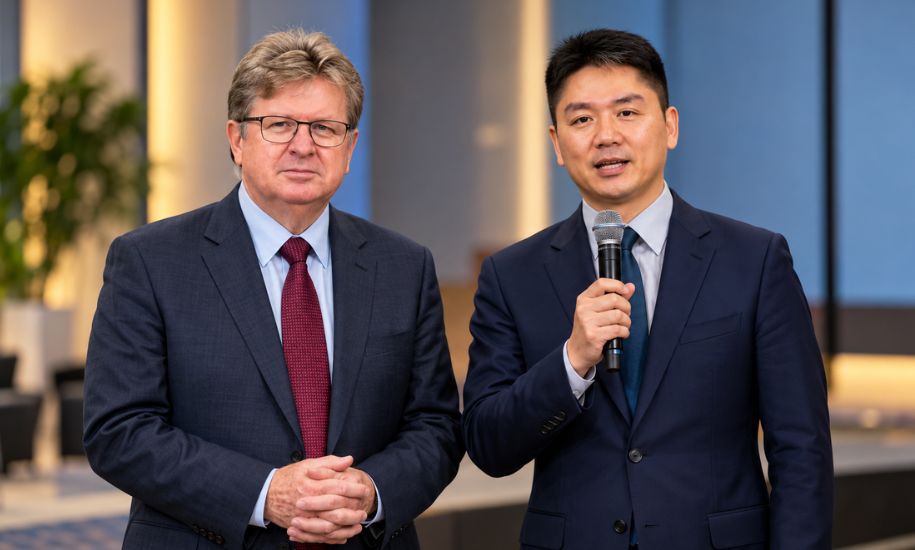
The worlds of technology and traditional industry have produced some of the most influential business leaders of the modern era. Richard Liu and German Larrea represent two different paths to extraordinary wealth. Liu built his reputation through e-commerce and digital logistics in China, while Germán Larrea Mota-Velasco established his position through mining, rail transportation, and industrial infrastructure in Mexico. Their careers offer an interesting comparison of entrepreneurship, long-term business strategy, and the industries that shape global fortunes. Although both men have achieved significant financial success, their companies, professional backgrounds, and approaches to business reflect very different economic environments.
Quick Bio: Richard Liu and German Larrea
| Detail | Richard Liu | Germán Larrea |
|---|---|---|
| Full name | Richard Qiangdong Liu | Germán Larrea Mota-Velasco |
| Nationality | Chinese | Mexican |
| Profession | Entrepreneur and business leader | Business magnate and industrial executive |
| Main company | JD.com | Grupo México |
| Primary industry | E-commerce and technology | Mining, transportation, and infrastructure |
| Known for | Building JD.com into a major online retailer | Leading a major mining and industrial conglomerate |
| Leadership role | Founder and chairman of JD.com | Chairman and executive president of Grupo México |
| Spouse | Zhang Zetian | Married; his wife’s identity is not widely publicized |
| Children | Public reporting identifies a daughter | Public reporting identifies a daughter |
Who Is Richard Liu?
Richard Qiangdong Liu, widely known as Liu Qiangdong, is a Chinese entrepreneur best known for founding JD.com, one of China’s major e-commerce companies. His professional journey demonstrates how a relatively small retail operation can develop into a large technology-driven enterprise.
Liu began his business career in 1998 by opening a shop selling electronic products in Beijing. Rather than starting with a large technology company, he gained experience through traditional retail, learning about product quality, customer service, inventory, and distribution. These early lessons later influenced his approach to online commerce.
In 2004, Liu moved his business online and established what became JD.com. The company grew alongside China’s internet economy, serving customers who increasingly preferred the convenience of shopping through digital platforms.
A key element of his strategy was investing in logistics and delivery infrastructure. While many online retailers relied heavily on outside services, JD.com developed extensive warehousing and distribution capabilities. This helped the company strengthen its control over delivery operations and customer experience.
Liu’s background in retail, combined with his willingness to invest in technology and supply-chain systems, helped transform his business into a major player in China’s competitive digital economy.
Richard Liu’s Career at JD.com
JD.com is the central business behind Liu’s professional achievements. Its activities extend beyond operating an online shopping platform to include logistics, healthcare services, technology, and other digital businesses.
The company has invested in warehouses, delivery networks, automation, and supply-chain management. These investments support a business model in which reliable fulfillment and product authenticity are important parts of the customer experience.
Liu served as JD.com’s chief executive officer until April 2022 and remains its founder and chairman. He also holds leadership positions associated with JD Health and JD Logistics, reflecting his continued involvement in the wider business group.
His career illustrates how technology companies can create value through more than software or online storefronts. Physical infrastructure, efficient distribution, and customer trust can also become important competitive advantages.
For Liu, building a comprehensive commerce ecosystem has been a significant part of his business legacy.
Who Is Germán Larrea?
Germán Larrea Mota-Velasco is a Mexican business magnate associated with Grupo México, a major company operating in mining, transportation, and infrastructure. His career represents a different route to wealth from Liu’s technology-focused entrepreneurship.
Larrea began his entrepreneurial journey in the publishing and advertising industry. In 1978, he founded Grupo Impresa, a company he led until it was sold in 1989. This early experience provided him with a foundation in business management before his career became closely associated with heavy industry.
He subsequently advanced within Grupo México, becoming its chairman, president, and chief executive in 1994. He had joined the company’s board in 1981 and previously served as executive vice chairman.
Under his leadership, Grupo México expanded its activities across important industrial sectors. The company developed a significant presence in mining while also strengthening its transportation and infrastructure operations.
Larrea is known for maintaining a relatively private public profile. Unlike technology entrepreneurs who frequently appear in interviews or public discussions, he has generally kept his personal life away from the spotlight.
Grupo México and Larrea’s Business Empire
Grupo México is the principal business associated with Larrea’s wealth. Its operations include mining, railway transportation, and infrastructure, connecting the company to industries that support manufacturing, trade, construction, and international supply chains.
Copper is especially important to its mining business. The metal is widely used in electrical wiring, power systems, construction, industrial equipment, and renewable-energy infrastructure. Demand for copper can therefore be influenced by economic growth, industrial investment, and changes in energy technology.
Grupo México also has mining operations beyond Mexico, including activities in Peru and the United States. Its transportation business provides another major source of industrial activity through freight rail operations.
This combination gives the group exposure to several connected parts of the economy. Mining produces essential materials, while rail transportation helps move goods and resources across large distances.
However, industrial success also comes with challenges. Mining companies face commodity-price fluctuations, operating costs, environmental responsibilities, and regulatory requirements. Grupo México has faced scrutiny over environmental issues, including a 2014 mining-related spill in Sonora that contaminated nearby rivers.
These challenges illustrate the complexity of managing a major industrial enterprise. Its performance depends not only on leadership and investment but also on market conditions, operational standards, and relationships with regulators and local communities.
Richard Liu and German Larrea Net Worth
The wealth of both businessmen is closely connected to their ownership interests and the performance of their respective companies. However, their financial fortunes are influenced by different economic factors.
Richard Liu’s wealth is associated primarily with JD.com and its related businesses. The value of e-commerce companies can change with share prices, revenue growth, investor expectations, competition, and the overall performance of the technology sector.
Germán Larrea’s fortune is primarily connected to his interests in Grupo México and the wider mining and industrial sector. Commodity prices, copper production, railway operations, and company valuations can all influence estimates of his wealth.
Forbes listed Richard Liu’s estimated net worth at approximately $5.7 billion in a September 2026 snapshot. Its real-time billionaire profile placed Germán Larrea and his family at approximately $70.1 billion on October 14, 2026. These are estimates rather than confirmed personal bank balances, and they were recorded on different dates.
The comparison demonstrates the importance of distinguishing between personal wealth and business revenue. A company’s sales or profits are not the same as its owner’s net worth, which generally reflects assets, ownership stakes, liabilities, and changes in market valuations.
Comparing Their Business Strategies
Although their industries differ, both men have built businesses around essential customer or economic needs.
Liu’s approach has emphasized digital retail, logistics, and technology. His company serves consumers and businesses through online platforms supported by distribution infrastructure. Success depends on managing costs, maintaining customer trust, adapting to technological change, and competing in a rapidly evolving market.
Larrea’s business interests focus on natural resources and industrial transportation. His companies operate in sectors where equipment, infrastructure, regulatory compliance, and long-term investment require substantial capital. Success is closely linked to production efficiency, commodity prices, and the ability to manage large industrial operations.
There is also a difference in the pace of their markets. Technology and online retail can change quickly as consumer preferences and digital systems evolve. Mining and railway infrastructure typically involve longer investment cycles, physical assets, and projects that may take years to develop.
Neither approach is automatically superior. Their results reflect the economic opportunities, risks, and management challenges associated with different industries.
Are Richard Liu and German Larrea Related or Business Partners?
Richard Liu and Germán Larrea are often discussed together in comparative articles because of their substantial fortunes and influential business positions. However, their documented professional backgrounds point to separate business careers.
Liu is associated with JD.com and China’s e-commerce sector, while Larrea leads Grupo México and has interests in mining and transportation. The reliable biographical and corporate sources reviewed do not establish that the two men are relatives, business partners, or co-owners of a shared enterprise.
It is therefore more accurate to compare their achievements and companies than to assume a personal or commercial relationship between them.
Their stories nevertheless offer useful examples of how entrepreneurs and executives can build substantial fortunes through different industries, business models, and long-term investment decisions.
Conclusion
Richard Liu and Germán Larrea illustrate two distinct forms of business success. Liu built JD.com into a major digital commerce enterprise by combining online retail with logistics and technology, while Larrea developed his position through mining, rail transportation, and industrial infrastructure. Their careers show how wealth can emerge from very different economic activities, each requiring its own strategy, investment priorities, and risk management. For readers interested in international business leaders, their contrasting journeys provide valuable insights into entrepreneurship and industrial development. At Brit Current, exploring these business stories helps readers better understand the people, companies, and economic forces shaping today’s global economy.