Cheek fillers have become a popular nonsurgical option for people who want to restore facial volume, enhance cheekbone definition, or achieve a more balanced appearance. Looking at cheek filler before and after pictures can help explain how this treatment changes facial contours, but the results are not identical for everyone. The amount of filler used, the patient’s natural facial structure, and the injection technique all influence the final outcome. Whether someone is considering a subtle 1 ml enhancement or a more noticeable 2 ml treatment, understanding the process, recovery, and potential risks is essential before making a decision.
What Is Cheek Filler?
Cheek filler is a cosmetic injectable treatment designed to add volume to the cheeks and improve facial contours. Most commonly, practitioners use hyaluronic acid (HA) dermal fillers, a substance that naturally occurs in the body and helps maintain skin hydration and volume.
The treatment can address several aesthetic concerns, including hollow cheeks, reduced midface volume, less-defined cheekbones, and certain age-related changes. Some people choose cheek fillers to enhance their natural facial structure, while others seek to restore fullness that has diminished over time.
Unlike surgical cheek augmentation, injectable fillers generally require little downtime. However, they are still medical procedures and should be performed by a qualified healthcare professional with appropriate experience.
Cheek Filler Before and After: What Changes Can You Expect?
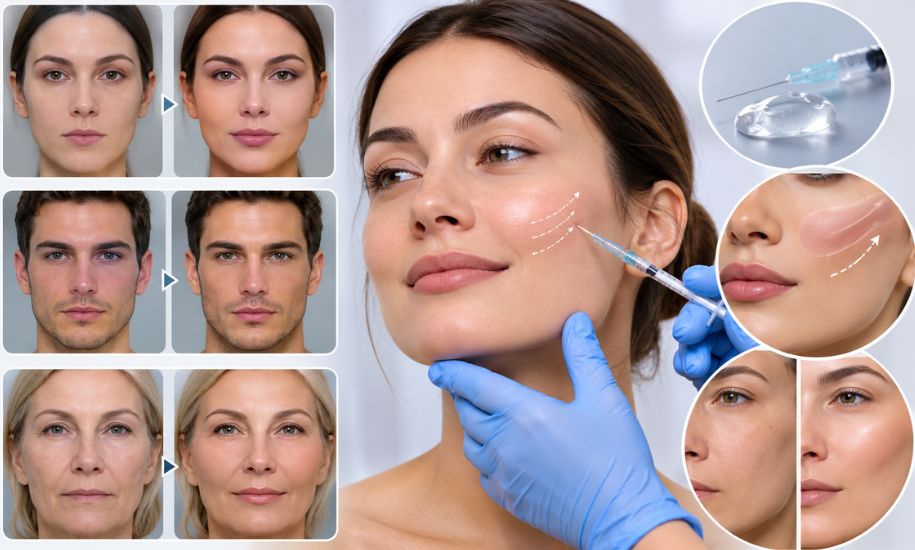
The most noticeable difference in before-and-after photographs is often increased cheek volume and improved facial definition.
Before treatment, a person may have flatter cheeks, less prominent cheekbones, or a hollow appearance in the midface. After treatment, carefully placed filler may create a fuller cheek contour and a more balanced transition between the cheeks and surrounding facial features.
Possible improvements include:
- More noticeable cheekbone definition.
- Restored volume in hollow areas.
- Improved midface projection.
- A refreshed facial appearance.
- Better balance between facial features.
The goal is not necessarily to make the cheeks look dramatically larger. For many patients, a subtle enhancement that complements their natural anatomy produces the most satisfying result.
Before-and-after pictures should be viewed carefully. Lighting, facial expressions, camera angles, and the time between photographs can influence how dramatic the difference appears.
1 ml Cheek Filler Before and After
A 1 ml cheek filler treatment may provide a subtle enhancement, particularly for someone who already has relatively defined cheekbones.
One syringe of cheek filler before and after results can vary considerably depending on how the product is distributed. It is important to understand whether 1 ml refers to the total amount used across both cheeks or the amount injected into each cheek.
When 1 ml is divided between both sides, the result may be relatively conservative. Some people may notice improved cheek projection, while others may see only a small change.
A smaller volume can be appropriate for someone who wants a natural-looking enhancement or is beginning treatment for the first time. However, it may not provide enough volume for individuals with substantial facial hollowing.
The suitability of 1 ml depends on facial anatomy, treatment goals, and the specific filler product.
Cheek Filler Before and After 2ml
A 2 ml cheek filler treatment may create a more noticeable change in cheek volume and definition.
Depending on the treatment plan, 2 ml may be distributed between both cheeks or used in another configuration. The final result depends on the placement, product characteristics, and the patient’s existing facial structure.
Some people may achieve improved cheekbone projection and a fuller midface with this amount. However, using more filler does not automatically produce a better result.
Excessive volume can create an overfilled appearance or make the cheeks look disproportionate. A qualified practitioner should determine the appropriate amount rather than relying on a fixed syringe quantity.
The difference between 1 ml and 2 ml is therefore not simply a matter of doubling the visible effect. Facial anatomy and injection placement play equally important roles.
Mid Cheek Filler Before and After
The mid-cheek area is an important part of facial structure. It contributes to the transition between the lower eyelid, cheekbone, and lower face.
Mid cheek filler before and after results may show improvements in central cheek fullness, facial projection, and the appearance of certain hollows.
This treatment may be considered by people who have lost volume in the middle of the face or who naturally have flatter cheeks.
Restoring volume in the midface may also influence the appearance of nearby facial features. However, cheek filler does not directly treat every type of under-eye hollow, wrinkle, or skin laxity.
A detailed assessment is important because the midface contains blood vessels and other structures that require careful consideration during injection.
Cheek Filler Before and After for Men
Cheek filler is not limited to women. Men may also choose this treatment to enhance cheekbone definition, restore facial volume, or improve facial proportions.
Cheek filler before and after men photographs may show subtle improvements in facial structure rather than dramatic changes in cheek size.
Some men prefer a more angular appearance, while others want to restore volume lost with age. Treatment should be tailored to the individual’s anatomy and personal goals.
A natural-looking result should complement the patient’s existing facial characteristics. There is no single injection pattern or filler amount that is appropriate for every man.
Cheek Filler Before and After Over 50
As people age, changes in facial fat distribution, bone structure, and skin elasticity can affect the appearance of the cheeks.
Cheek filler before and after over 50 results may demonstrate improved cheek fullness, better midface projection, and a more refreshed appearance.
Hyaluronic acid fillers can help restore some lost volume, but they cannot reverse every aspect of facial aging.
People with significant skin laxity may require a different approach. A consultation can help determine whether fillers are suitable or whether another treatment would better address their concerns.
Age alone does not determine whether someone is a suitable candidate. Overall health, facial anatomy, expectations, and medical history are important considerations.
Cheek Filler Recovery: When Do Results Settle?
Cheek filler results are often visible immediately after treatment. However, swelling and bruising can temporarily affect the appearance of the cheeks.
The recovery process varies from person to person.
Immediately after treatment: The cheeks may look fuller, with possible redness, tenderness, or swelling.
After 24–48 hours: Swelling or bruising may remain noticeable. Some people experience only mild symptoms.
After one week: Common side effects often begin to improve, and the cheeks may look more natural.
After approximately two weeks: Many patients can assess their results more accurately as initial swelling subsides.
The exact settling time depends on the filler product, treatment area, and individual response. Patients should follow their practitioner’s aftercare instructions and attend any recommended follow-up appointment.
How Long Does Cheek Filler Last?
The longevity of cheek fillers depends on the product used and individual factors.
Hyaluronic acid cheek fillers commonly last around a year, although some products may provide results for longer. Other filler materials can have different durations.
Factors that influence longevity include:
- The type and brand of filler.
- The amount injected.
- The treatment area.
- Individual metabolism.
- Facial movement and other personal factors.
Results gradually diminish as the filler breaks down. Patients should discuss maintenance treatments with their practitioner rather than assuming that regular injections are necessary.
Cheek Filler Cost: What Affects the Price?
Cheek filler cost varies according to location, clinic, practitioner experience, filler brand, and the amount required.
A treatment using 1 ml may cost less than a treatment involving 2 ml or more. However, the price per syringe is not the only factor worth considering.
Patients should also evaluate the practitioner’s qualifications, the authenticity of the filler product, consultation fees, and access to appropriate medical care if complications occur.
Choosing a provider based solely on the lowest price may not be the safest approach.
Risks and Side Effects of Cheek Filler
Although cheek fillers are minimally invasive, they are not risk-free.
Common side effects include swelling, bruising, redness, tenderness, and discomfort around injection sites. These effects are often temporary.
More serious complications can include infection, lumps, allergic reactions, and accidental injection into a blood vessel.
Vascular complications are rare but may cause tissue damage, vision problems, blindness, or stroke. Anyone considering cheek filler should understand these risks and choose an appropriately qualified medical professional.
Severe or unusual pain, skin discoloration, or any vision changes following treatment require immediate medical attention.
Frequently Asked Questions
Does cheek filler make a noticeable difference?
It can. Results may include improved cheek volume, enhanced cheekbone definition, and better facial projection. The degree of change depends on the individual.
Is 1 ml of cheek filler enough for both cheeks?
It may be enough for subtle enhancement in some people. Others may require a different amount depending on their anatomy and goals.
Is 2 ml of cheek filler too much?
Not necessarily. Two millilitres may be appropriate for some patients, but the amount should be determined by a qualified practitioner.
How long does cheek filler take to settle?
Many patients find that their results become easier to assess after approximately two weeks, although recovery varies.
Can cheek filler look natural?
Yes. Conservative treatment tailored to facial anatomy can produce natural-looking results, but outcomes cannot be guaranteed.
Final Thoughts
Cheek filler can offer a nonsurgical way to improve cheek volume, enhance facial contours, and create a refreshed appearance. From subtle 1 ml treatments to more noticeable 2 ml enhancements, the best results depend on careful treatment planning, realistic expectations, and a qualified medical professional. Before choosing a procedure, patients should consider the potential benefits, recovery time, cost, and risks. At Brit Current, our goal is to provide clear, informative content that helps readers understand cosmetic treatments and make thoughtful, well-informed decisions about their personal care.