
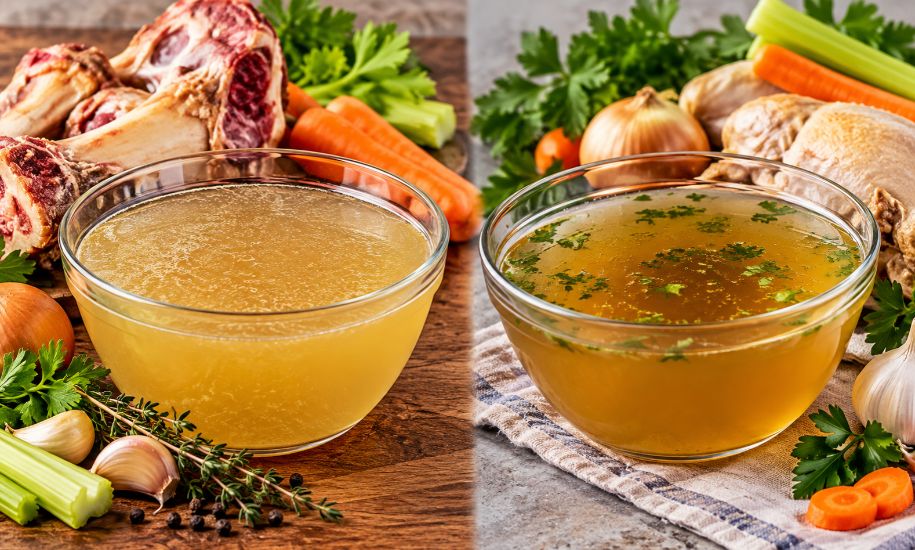
Stock and broth are two essential ingredients that can transform an ordinary meal into something rich, flavorful, and comforting. They are often sold side by side in grocery stores, and their labels can make them seem almost identical. However, traditional preparation methods, texture, seasoning, and culinary uses set them apart. Understanding these differences can help you choose the right liquid for soups, sauces, gravies, and other everyday dishes.
Although the two can usually be substituted for one another, each has qualities that make it particularly useful in certain recipes. From vegetable preparations to chicken stock and bone broth, knowing what goes into each option makes cooking easier and helps you achieve better results.
What Is the Difference Between Stock and Broth?
The main difference comes down to the ingredients used and the way the liquid is prepared. Stock is traditionally made by simmering bones and connective tissue with vegetables and aromatics. Broth is generally prepared by simmering meat, vegetables, herbs, and seasonings in water.
Stock often develops a fuller texture because collagen from bones and connective tissue can turn into gelatin during cooking. When refrigerated, a gelatin-rich stock may become soft and jelly-like before returning to liquid when heated.
Broth is usually lighter and more immediately seasoned. It can be enjoyed on its own or used as a base for soups, noodles, and other dishes.
| Feature | Stock | Broth |
|---|---|---|
| Main ingredients | Bones and connective tissue | Meat, vegetables, and seasonings |
| Texture | Often rich and gelatinous when chilled | Generally lighter and more fluid |
| Flavor | Deep and rounded | Often lighter and well-seasoned |
| Seasoning | Frequently unsalted or lightly seasoned | Often contains added salt and herbs |
| Cooking time | Commonly several hours | Often shorter, depending on ingredients |
| Best uses | Gravies, sauces, stews, and risotto | Soups, sipping, noodles, and everyday meals |
These distinctions are traditional guidelines rather than strict rules. Recipes vary, and packaged products may use the terms differently.
What Is Stock?
Stock is a flavorful cooking liquid traditionally prepared by simmering bones, cartilage, connective tissue, vegetables, and aromatic ingredients in water. Chicken carcasses, beef bones, and fish bones are common starting points, depending on the recipe.
The cooking process gradually extracts flavor and gelatin-forming compounds from the ingredients. This gives many stocks a satisfying mouthfeel that works especially well in dishes where texture matters.
Stock is often left unsalted or lightly seasoned because it may be reduced during cooking. If a stock is reduced significantly, its flavor becomes more concentrated. Starting with little or no salt makes it easier to control the final seasoning.
Common uses for stock include:
- Making rich gravies and pan sauces.
- Preparing risotto and other rice dishes.
- Braising meat and vegetables.
- Building flavor in stews and casseroles.
- Creating creamy soups with a fuller texture.
Homemade stock is also a practical way to use leftover bones and vegetable trimmings. Simmering them with suitable aromatics produces a useful base for future meals.
What Is Broth?
Broth is a savory liquid made by simmering meat, vegetables, herbs, and seasonings in water. Chicken broth, beef broth, and vegetable broth are widely used in home cooking.
Unlike traditional stock, broth is often prepared with the intention of producing a pleasant, balanced flavor that can be enjoyed without extensive additional cooking. It may be seasoned with salt, pepper, garlic, onions, parsley, or other herbs.
Broth is particularly useful when you want a lighter liquid that already tastes good on its own. It works well in chicken noodle soup, vegetable soup, noodle dishes, and simple meals that benefit from extra moisture and flavor.
You can also drink warm broth as a savory beverage. However, its nutritional value and sodium content depend on the ingredients and preparation method.
Difference Between Vegetable Stock and Vegetable Broth
Vegetable stock and vegetable broth are slightly different from their meat-based counterparts because neither relies on bones or animal meat.
Both are commonly made by simmering ingredients such as carrots, onions, celery, garlic, mushrooms, parsley, and bay leaves in water. The vegetables release their flavors into the liquid, creating a useful base for plant-based dishes.
The distinction is largely a matter of culinary convention. Some cooks use vegetable stock as a neutral foundation for other recipes and vegetable broth as a more seasoned liquid intended to be served directly. However, there is no universal rule separating the two.
Vegetable stock can be useful for risotto, sauces, and recipes where the cook wants to control the final seasoning. Vegetable broth is convenient for soups, noodles, and meals that need a ready-seasoned base.
Neither is automatically thicker or healthier than the other. The ingredients, salt content, and cooking method have a greater influence on the final result than the label alone.
Difference Between Stock and Broth vs. Chicken Broth
Chicken stock and chicken broth are especially easy to confuse because both contain chicken flavor and can be used in many of the same recipes.
Chicken stock is traditionally made using chicken bones, joints, and connective tissue, sometimes with small amounts of meat and vegetables. It can develop a rich texture from gelatin extracted during simmering.
Chicken broth is commonly made using chicken meat, vegetables, and seasonings. It often has a lighter consistency and can be served as a soup or enjoyed by itself.
For example, chicken stock is an excellent choice for making gravy because its gelatin can help create a fuller sauce. Chicken broth works particularly well in chicken noodle soup when you want a clean, savory flavor.
However, supermarket products do not always follow these traditional distinctions. Some chicken broths contain bones, while some chicken stocks contain meat. Checking the ingredient list is the best way to understand what you are buying.
Stock vs. Bone Broth: Are They the Same?
Bone broth is closely related to stock because both are prepared by simmering bones and connective tissue in water. The main differences generally involve cooking time, seasoning, concentration, and intended use.
Traditional stock is primarily designed as a cooking ingredient. Bone broth is often simmered for an extended period and seasoned so it can be consumed as a drink. Nevertheless, the terminology is not standardized, and some products marketed as bone broth resemble ordinary stock.
Bone broth may contain protein and gelatin, but its nutritional composition varies depending on the bones, water ratio, cooking method, and other ingredients.
It is therefore inaccurate to assume that every bone broth is more nutritious than every stock. The product’s nutritional information provides a more useful comparison.
Which Is Healthier, Stock or Broth?
Neither stock nor broth is automatically healthier. Their nutritional differences depend on how they are prepared and what they contain.
Stock made with bones and connective tissue may contain gelatin and protein. Broth prepared with meat can also provide protein, while vegetable-based versions may contribute small amounts of nutrients extracted from the vegetables.
Sodium is another important consideration. Commercial products can differ considerably in salt content, so comparing nutrition labels is helpful, particularly if you are trying to reduce sodium intake.
Calories and fat also vary. A stock made with fatty bones may contain more fat than a carefully skimmed version, while a broth prepared with lean meat may be relatively light.
For a practical choice, look for products with ingredients that suit your needs, compare sodium per serving, and consider how much you will consume. Homemade versions offer greater control over seasoning and fat.
Is Stock or Broth Better for Soup?
Both are excellent choices for soup, but the best option depends on the result you want.
Stock is often preferable for creamy soups, hearty stews, and recipes where a fuller mouthfeel is desirable. Its gelatin content can help create a richer texture without necessarily adding cream or flour.
Broth is a good option for lighter soups, clear chicken soup, and noodle dishes. Because it is often seasoned, it can provide a convenient flavor base with minimal preparation.
You do not have to follow a strict rule. A well-made broth can produce a delicious creamy soup, and stock can be used in a simple vegetable soup. Taste the liquid before adding more salt, especially when using packaged products.
Can You Substitute Broth for Stock?
Yes, stock and broth are generally interchangeable in most everyday recipes. You can usually replace one with the other in equal quantities without significantly changing the cooking process.
There are a few things to consider:
First, taste the liquid before adding salt. Broth may already be seasoned, while stock is often less salty. Second, remember that broth may produce a thinner sauce than gelatin-rich stock. You can simmer the sauce to reduce excess liquid or use an appropriate thickening method if necessary.
Finally, consider the flavor of the finished dish. Stock may provide greater richness, while broth can contribute a lighter, more seasoned taste.
If a recipe calls for stock and you only have broth, there is usually no reason to postpone cooking. Adjust the seasoning and consistency as needed.
Frequently Asked Questions
Is stock the same as broth?
Not traditionally. Stock is generally made with bones and connective tissue, while broth is commonly prepared with meat, vegetables, and seasonings. In commercial products, however, the distinction can be less clear.
Can I drink stock instead of broth?
Yes, provided it has been prepared and stored safely. Stock can be enjoyed as a warm drink, although it may need seasoning to taste pleasant on its own.
Does stock always contain more protein than broth?
No. Protein content varies with the ingredients and preparation method. Compare the nutrition labels rather than assuming that one type always contains more protein.
Is vegetable broth healthier than chicken broth?
Neither is universally healthier. Vegetable broth may be suitable for plant-based diets, while chicken broth may provide protein depending on its ingredients. Sodium levels and overall nutritional content should also be considered.
Why does homemade stock turn into jelly in the refrigerator?
Gelatin released from collagen-rich bones and connective tissue can cause stock to set when chilled. It normally becomes liquid again when heated.
Final Thoughts
Stock and broth share many similarities, but their traditional differences can influence flavor, texture, and the final result of a recipe. Stock is often valued for its richness and body, while broth offers a lighter, frequently seasoned liquid that works well in soups and everyday meals. Vegetable versions are largely interchangeable, and chicken stock, chicken broth, and bone broth can overlap depending on how they are made.
Once you understand these distinctions, choosing between them becomes straightforward. For more practical cooking explanations and everyday food guides, Brit Current aims to help readers make informed choices in the kitchen.
